
PCL Surgery
Home › Our Specialities
PCL Surgery in Lucknow
Falling on the knee when it is bent and during an auto accident when the knee strikes against the dashboard. Sportspersons who play football and soccer can tear their PCL when they fall on their bent knee. The shinbone gets hit on the ground first and it moves backward.
Signs and Symptoms of PCL Injuries
Swelling: Swelling in knee happens rapidly and that too within hours of injury
Pain: Mild to moderate pain in the knee leads to slight limp or difficulty while walking
In case, there are injuries to other parts of the knee, the symptoms of PCL can be very mild that it may be barely unnoticeable. Over time, the pain can worsen and the knee might feel more unstable.
Diagnosis of PCL Injury
The doctor will diagnose a PCL injury and will perform a variety of tests that include:
- Physically examining the knee
- Moving your injured knee in various directions
- Checking for fluid in the knee joint
- Taking an X-ray of the knee joint to check for fractures
- MRI of the knee
Treatment for PCL Injuries
The treatment for PCL totally depends on the extent of the injury and whether it was a recent injury or if one had it for a while.
Medications
Certain over the counter pain relievers or the medicines prescribed by your doctor can help.
Surgery
If the PCL injury is severe and if it is combined with the other torn knee ligaments or a broken bone, you have to go through a surgery to reconstruct the ligament. You may require surgery if you have regular episodes of knee instability despite appropriate rehabilitation.
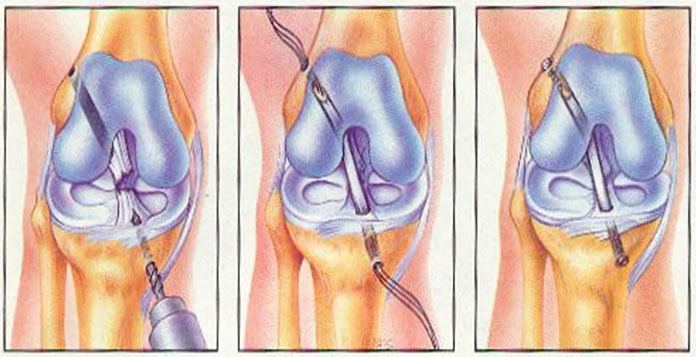
The surgery is performed where the surgeon will insert a fiber-optic camera and long and surgical tools through various small incisions around the knee.
PCL Surgery in Lucknow
PCL surgery, usually performed as PCL reconstruction, may be considered for selected patients with significant posterior cruciate ligament injury and persistent knee instability. Treatment depends on the injury grade, associated ligament damage, symptoms, activity requirements, and response to rehabilitation.
At Orygyn Clinic, Gomti Nagar, Lucknow, Dr. Gaurav Sharma provides orthopedic evaluation and arthroscopic care for knee conditions. His published profile documents dedicated arthroscopy training and lists knee arthroscopic surgery among his areas of specialization.
A PCL tear does not automatically mean surgery is required. Isolated lower-grade PCL injuries are often initially managed without surgery, while surgery may be considered for selected patients with high-grade instability, combined ligament injuries, or persistent symptoms despite appropriate non-surgical treatment.
PCL Surgery in Lucknow
PCL surgery, usually performed as PCL reconstruction, may be considered for selected patients with significant posterior cruciate ligament injury and persistent knee instability. Treatment depends on the injury grade, associated ligament damage, symptoms, activity requirements, and response to rehabilitation.
At Orygyn Clinic, Gomti Nagar, Lucknow, Dr. Gaurav Sharma provides orthopedic evaluation and arthroscopic care for knee conditions. His published profile documents dedicated arthroscopy training and lists knee arthroscopic surgery among his areas of specialization.
A PCL tear does not automatically mean surgery is required. Isolated lower-grade PCL injuries are often initially managed without surgery, while surgery may be considered for selected patients with high-grade instability, combined ligament injuries, or persistent symptoms despite appropriate non-surgical treatment.
Symptoms That May Indicate a PCL Injury
Patients often describe their symptoms in everyday language. Common symptoms include:
Pain at the back of the knee
Swelling after a knee injury
Difficulty walking comfortably
Knee feeling unstable
Pain while climbing or descending stairs
Difficulty bending the knee completely
Reduced range of knee movement
Pain during sports or physical activities
Feeling that the knee shifts backward
Persistent knee discomfort after an injury
Pain at the back of the knee
Swelling after a knee injury
Difficulty walking comfortably
Knee feeling unstable
Pain while climbing or descending stairs
Difficulty bending the knee completely
Reduced range of knee movement
Pain during sports or physical activities
Feeling that the knee shifts backward
Persistent knee discomfort after an injury
These symptoms alone do not confirm a PCL tear. A clinical examination and imaging studies are important before treatment decisions are made.
When Should You See a Doctor Urgently?
Seek immediate medical attention if you experience:
- Inability to bear weight
- Rapid swelling
- Severe knee instability
- Suspected fracture
- Suspected knee dislocation
- Severe pain preventing walking
- Open wounds around the knee
- Numbness or weakness in the leg or foot
- Significant deformity after trauma
- A high-energy road traffic injury
How Is a PCL Injury Diagnosed?
Accurate diagnosis guides the right treatment choice. At Orygyn Clinic, the process includes:
Clinical Examination
- Posterior drawer test
- Assessment of posterior tibial translation
- Knee stability testing
- Range of motion
- Gait assessment
- Muscle strength
- Examination of the ACL and other ligaments
- Meniscus assessment
- Assessment for posterolateral-corner instability
Imaging and Investigations
- X-ray
- MRI scan
- Stress or specialized radiographs when clinically indicated
- CT scan for selected complex injuries
- Pre-operative investigations when surgery is planned
Treatment Options Before PCL Surgery
Treatment depends on the severity of the injury, associated ligament damage, and patient activity level:
1) Activity Modification
- Avoiding high-impact activity
- Limiting pivoting sports
- Modifying work activities
- Gradually increasing activity as the knee improves
2) Pain and Swelling Management
- Prescribed pain-relieving medicines
- Anti-inflammatory medicines when appropriate
- Ice
- Elevation
- Temporary activity restriction
3) Physiotherapy
- Quadriceps strengthening
- Controlled knee movement
- Hip and core strengthening
- Balance training
- Neuromuscular control
- Functional exercises
- Gradual return to activity
3) PCL-Specific Bracing
- A PCL-supporting brace may be considered in selected patients to help control posterior tibial movement during rehabilitation.
Recovery Expectations
Recovery depends on the severity of the injury, surgical procedure, and rehabilitation programme:
Early Recovery
The initial stage generally focuses on protecting the reconstruction, controlling swelling, and restoring appropriate movement.
Intermediate Recovery
Strength, balance, and neuromuscular control are gradually developed.
Later Recovery
Functional and activity specific exercises may be introduced as appropriate.
Risks and Limitations of PCL Reconstruction
Possible Risks
- Infection
- Bleeding
- Blood clots
- Knee stiffness
- Persistent pain
- Graft failure
- Persistent posterior laxity
- Recurrent instability
- Nerve or blood-vessel injury
- Anaesthetic complications
- Need for additional surgery
Important Limitations
- Associated ligament injuries
- Cartilage damage
- Meniscus injury
- Pre-existing stiffness
- Muscle weakness
- Graft healing
- Rehabilitation adherence
- Previous knee surgery
- High-demand sports
RELATED TREATMENTS
Related Orthopedic Treatments
PCL reconstruction is performed to restore knee stability after a posterior cruciate ligament injury. Explore related orthopedic treatments that improve knee strength, support rehabilitation, and promote long-term joint function Orygyn Clinic.
Arthritis Treatment
Knee Replacement Surgery
Knee Arthroscopy
ACL Reconstruction
Fracture Treatment
Physiotherapy
Sports Injury Treatment
Knee Pain Treatment
Frequently Asked Questions
What is a PCL injury?
A PCL injury is a partial or complete tear of the posterior cruciate ligament, which helps stabilize the knee by preventing the shinbone from moving too far backward.
When is PCL surgery recommended?
PCL surgery may be recommended for complete ligament tears, persistent knee instability, combined ligament injuries, or when conservative treatment has not been successful.
Can a PCL tear heal without surgery?
Some isolated PCL injuries may be treated successfully with physiotherapy and rehabilitation. Treatment depends on the severity of the injury and individual functional needs.
How is a PCL injury diagnosed?
Diagnosis usually includes a clinical examination, MRI scan, X-rays, and additional investigations if associated injuries are suspected.
How long does PCL surgery take?
PCL reconstruction generally takes one to two hours, depending on the complexity of the injury and associated procedures.
Why choose Dr. Gaurav Sharma for PCL surgery in Lucknow?
Dr. Gaurav Sharma performs a detailed evaluation of PCL injuries through clinical examination and imaging studies to determine the most appropriate treatment. Based on the severity of the injury, associated ligament damage, and your activity level, he recommends a personalized treatment plan, including rehabilitation or PCL reconstruction surgery when medically indicated.
Is physiotherapy necessary after PCL surgery?
Yes. Physiotherapy is an important part of recovery and helps restore knee strength, movement, and stability.
When can I walk after PCL surgery?
Most patients begin walking with support according to the rehabilitation protocol recommended by their surgeon.
When can I return to sports?
Return to sports depends on healing, rehabilitation progress, knee stability, and the surgeon’s assessment.
What are the risks of PCL surgery?
Potential risks include infection, graft failure, knee stiffness, blood clots, persistent instability, and anaesthetic complications.
When should I seek urgent medical attention after a knee injury?
Seek immediate medical care if you cannot bear weight, experience rapid swelling, severe instability, suspect a fracture or dislocation, or have severe pain after trauma.
Does Orygyn Clinic provide pharmacy support after PCL surgery?
Orygyn Clinic has an in-house pharmacy for patient convenience. After PCL surgery, prescribed medications for pain management and post-operative recovery may be available at the clinic pharmacy, subject to availability. Patients also receive guidance on medication use, rehabilitation, and follow-up care.
Dr. Gaurav Sharma
Chief Orthopedic Specialist
Dr. Gaurav Sharma
Chief Orthopedic Specialist
Why Choose Orygyn Clinic?
- Led by Dr. Gaurav Sharma, MMBS, MS Orthopaedics, Fellowship in Arthroplasty, Fellowship in Arthroscopy
- Trained at Medanta, Gurgaon and Kokilaben Dhirubhai Ambani Hospital, Mumbai.
- Specialist in Joint replacement Surgery
- Modern operation theatre with laminar flow (infection control standard for joint surgery)
- Full orthopaedic and gynaecology facility under one roof
- Structured pre-operative, intra-operative, and post-operative protocols
- Dedicated physiotherapy support for rehabilitation
Dr. Gaurav Sharma
Dr. Gaurav Sharma is one of the best Orthopedic Surgeon in Lucknow. He is well known to provide patient-focused care and excellence in treating all conditions of Knee, Shoulder & other Orthopaedic problems.
Our Specialities
Dr. Ruchi Garg
Dr. Ruchi Garg is a dedicated Senior Obstetrician, Gynaecologist and Laparoscopy Surgeon with 23+ years of vast experience in clinical practice, surgeries & academics. She is well known for preferring & successfully conducting Normal Deliveries, even for her High-Risk Pregnancy Patients.